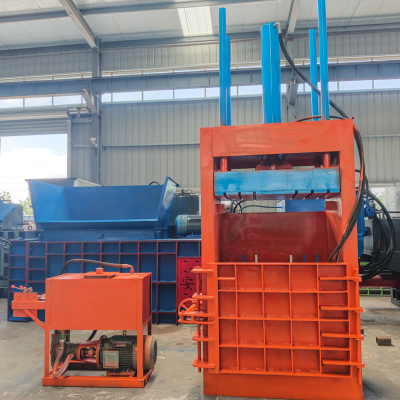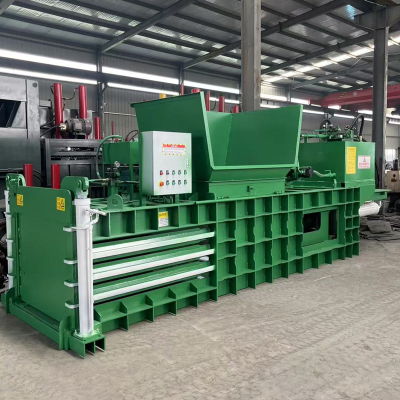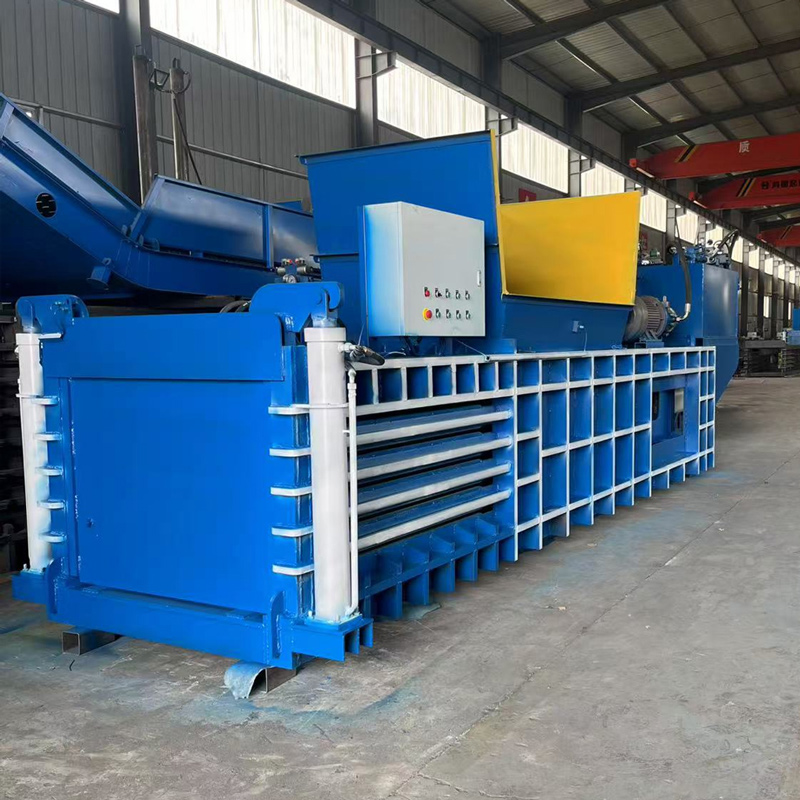
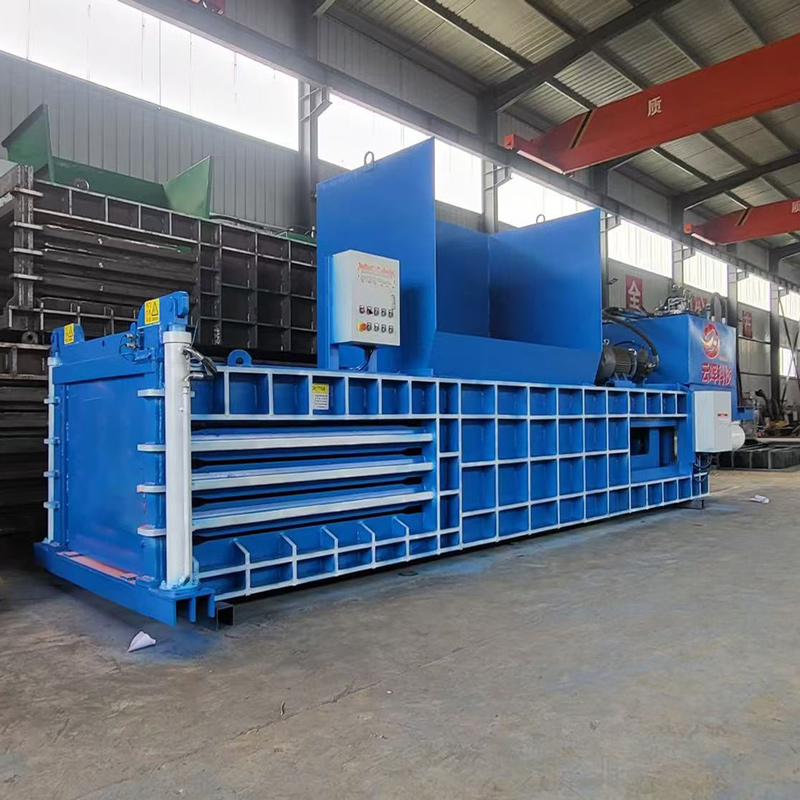
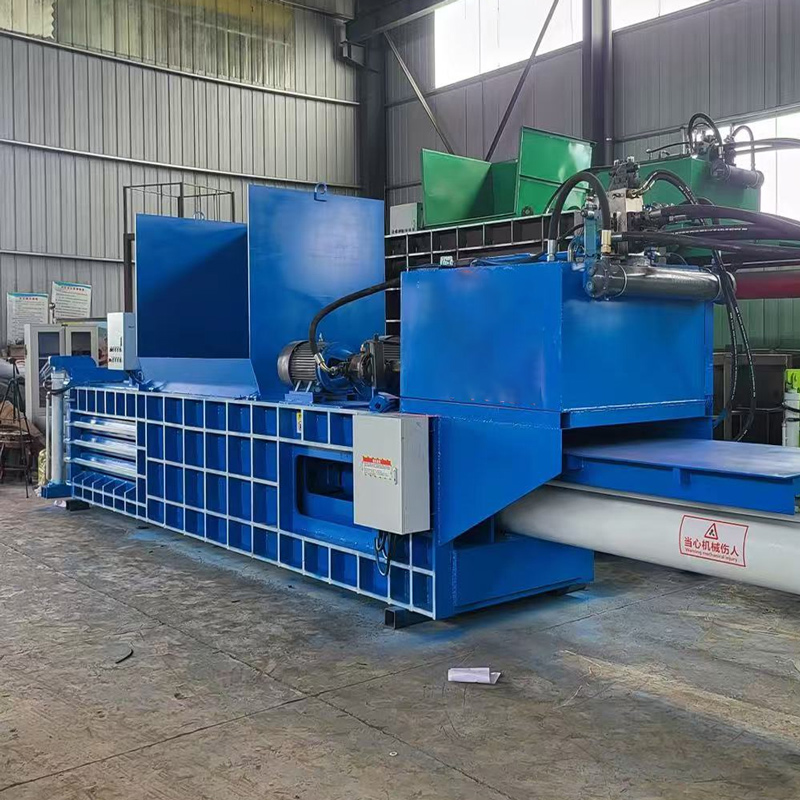
Horizontal Balers
Easy Operation & High Efficiency: User-friendly design with powerful hydraulic drive for smooth, continuous, and efficient baling.
Reliable Safety System: Equipped with explosion-proof and leakage protection for safe operation.
Versatile Applications: Handles paper, plastic, metal scrap, straw, and more — with adjustable bale sizes for different materials.
Space & Cost Saving: Compresses waste to save storage, cut transport costs, and boost efficiency.
Durable & Energy-Saving: Built for long service life with low maintenance and reduced energy use.
Product Introduction
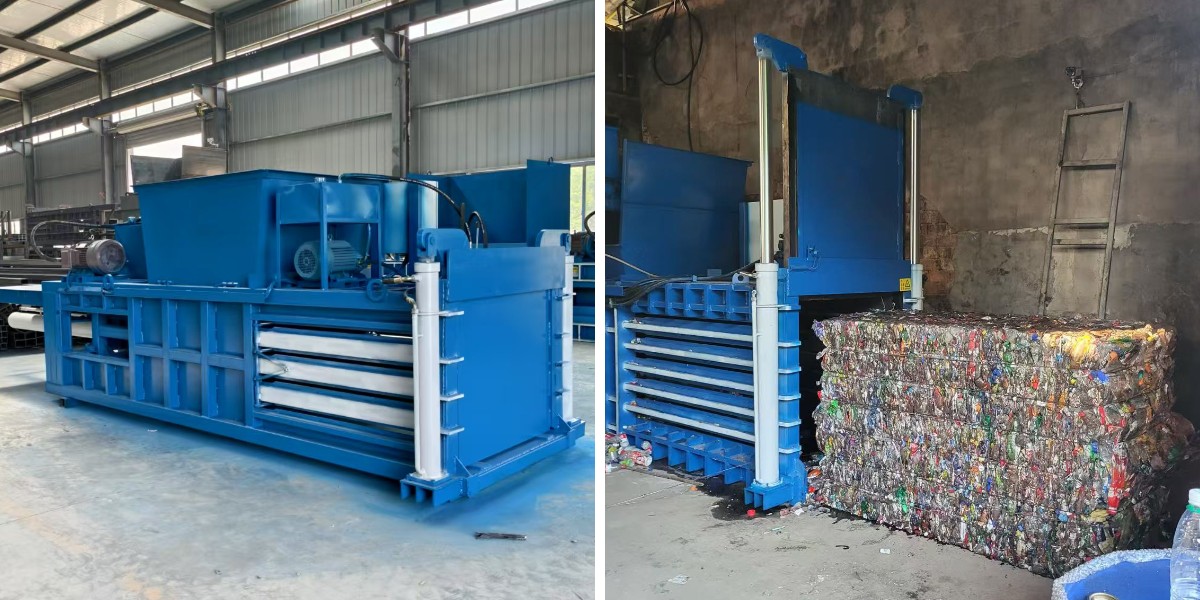
The horizontal hydraulic baling machine, also known as a strapping or packaging press, is designed for compressing and bundling recyclable materials such as cardboard, waste paper, plastic, fabric, straw, and metal scraps. It significantly reduces material volume, increases density, and facilitates storage, handling, and transportation.
This baling machine is widely used in metallurgy, petroleum, chemical, packaging, printing, recycling, and waste management industries, where high efficiency and automation are essential for sustainable production.
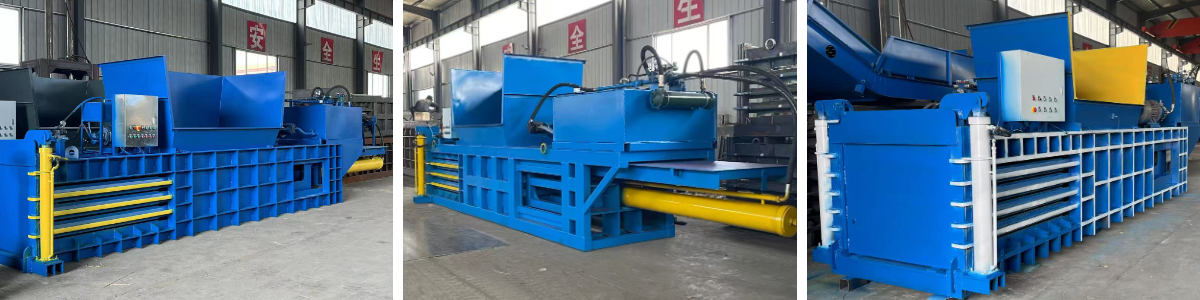
Applications
The horizontal baling machine is primarily used for compressing and baling loose materials such as waste paper (cardboard, newspaper, etc.), waste plastics, straw, fabric, fiber, and domestic waste. It is also suitable for compressing metal scrap, rubber, and other recyclable materials.
Through compression, the material volume is greatly reduced, increasing density for easier storage and transportation.
It is widely applied in metallurgy, petroleum, chemical industries, packaging plants, carton factories, printing plants, waste sorting stations, recycling centers, and scrap material processing facilities.
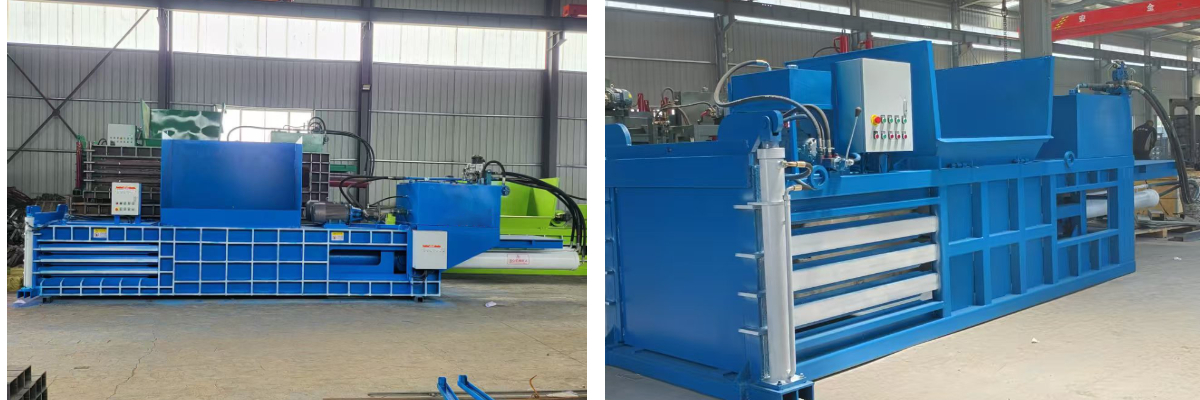
Features
Structural Design
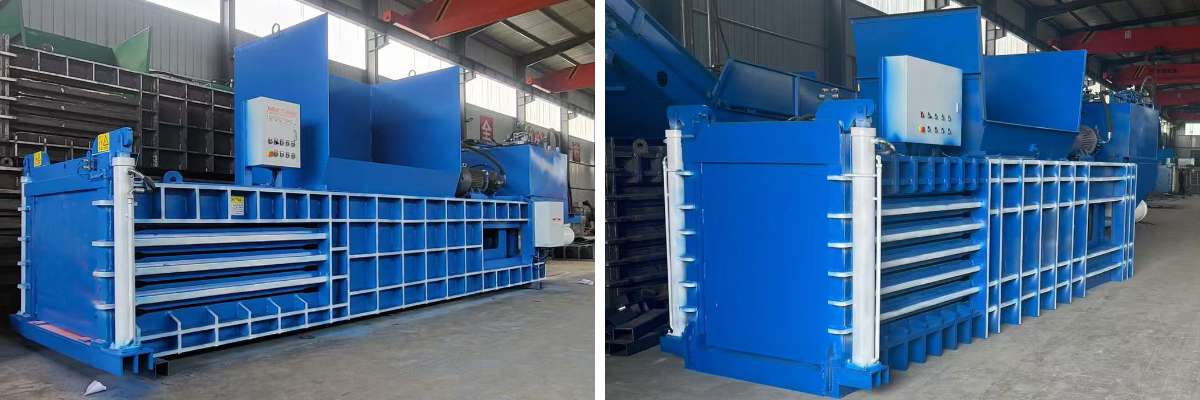
The horizontal layout allows materials to be fed and compressed from the side, saving time and labor. It features a sturdy frame, hydraulic system, pusher plate, and pressure gate as its main components.Operation Control
Available in fully automatic or semi-automatic modes. Equipped with PLC control and touch-screen interface for simple, reliable operation.
Some models also include infrared sensors, automatic fault detection, and diagnostic systems for unmanned operation.Baling Efficiency
The machine typically produces 4–8 bales per hour, depending on the material type and model.Customization Options
Adjustable bale sizes available to meet different density requirements. Custom dimensions can be designed according to customer needs.Additional Advantages
Operates on 380V power supply with optional air or water cooling systems for enhanced stability.
Some models feature dual interlocking doors and automatic strapping for improved baling efficiency and quality.
Market Status and Development Trends
With growing global concern over environmental protection, governments worldwide are strengthening waste management regulations.
The collection, sorting, and baling of recyclable waste is a complex process requiring significant labor and time. Traditional methods can no longer meet increasing production demands.
The horizontal baling machine has revolutionized the recycling industry by dramatically improving efficiency and reducing costs.
Currently, the domestic market for horizontal balers continues to expand, showing strong growth potential.
Maintenance and Care
To ensure stable operation and extend service life, regular maintenance is essential:
Clean out impurities before and after use.
Regularly lubricate all moving parts as required.
Inspect electrical components and grounding systems before each use.
Clean the oil tank and replace hydraulic oil every six months (for new machines, change the oil within the first month).
Conclusion
The horizontal baling machine, with its high efficiency, energy-saving, and environmentally friendly design, plays an essential role in the waste recycling and processing industry. It offers a reliable, cost-effective solution for modern recycling operations.